Ask five vendors how much it costs to build a telehealth platform and you will get five numbers spread across half a million dollars.
That is not evasiveness — it is the honest consequence of the word “telehealth” covering everything from a scheduling page with a video button to a multi-state clinical system wired into three EHRs and a claims pipeline.
So here are the numbers first, and the reasoning after.
- A startup MVP — web-first, one specialty, video, scheduling, payments, basic records: $80,000–$180,000, live in 4–6 months.
- A full production platform — web plus native apps, EHR integration, billing, admin tooling, enterprise security: $250,000–$700,000, delivered in phases over 9–18 months.
- A white-label platform — licensed software configured and integrated for you: roughly $25,000–$90,000 in the first year, depending heavily on setup, integrations, provider count, and pricing model. Some vendors charge $10,000–$50,000+ in setup fees plus $1,000–$8,000+ per month; others use per-provider, per-consult, or revenue-share pricing.
The rest of this article explains what moves a project inside those bands, what each component actually costs in engineering hours, and which line items get left out of most estimates until the invoice arrives.
Types of Telehealth Systems — and What Each One Costs
Telehealth system development cost is driven less by feature count than by which of these three products you are actually building. Quotes vary so widely because “telemedicine platform development cost” is really three different questions wearing one label.

Startup MVP: $80,000–$180,000
You are validating a care model, not replacing a hospital’s infrastructure. Scope is web-first, one clinical specialty, one payer relationship or cash-pay only, and a deliberately short feature list: accounts, intake, scheduling, video visit, visit notes, payment.
The low end of this band is real, but it is only reachable with discipline. Teams land at $80,000 when they use a video CPaaS instead of building WebRTC infrastructure, skip native mobile in favour of a responsive web app, and defer EHR integration to post-launch. Teams land at $180,000 when they add iOS and Android, e-prescribing, or a first EHR connection before they have a single paying customer.
Enterprise platform for a clinic or health system: $250,000–$700,000
Here the telehealth layer is a component inside an existing clinical and financial estate. The cost driver is not the video call — it is everything the video call has to talk to: an EHR with a decade of local customisation, a practice management system, an identity provider, a claims clearinghouse, and a security review board that will ask about every one of them.
Integration and compliance work routinely accounts for 35–50% of these budgets. Two clinics that describe the same requirement can differ by $200,000 based entirely on how their EHR is deployed and how many sites need separate approval.
White-label platform: $25,000–$90,000 in year one
You license a vendor’s core and pay to configure, brand, and integrate it. Upfront cost drops by roughly an order of magnitude and you can be live in weeks rather than quarters.
The trade is structural, not cosmetic. Pricing is typically per provider per month or per completed visit, so cost scales with your success rather than with your build. You inherit the vendor’s roadmap, their integration catalogue, and their outage window. And you are limited in how far you can differentiate the clinical workflow — which is fine if your differentiation is your provider network, and fatal if it is your product. Our white-label telemedicine guide walks through where that line usually falls.
What Drives the Cost
Six variables explain most of the spread between a $90,000 project and a $600,000 one.
Feature depth, not feature count. “Scheduling” can mean a calendar with open slots, or it can mean provider availability rules across time zones, multi-state licensure checks, waitlists, group visits, and interpreter booking. The first is three weeks. The second is three months. Estimates diverge wildly because briefs describe features by name rather than by behaviour.
Integrations. A read-only FHIR connection to one EHR vendor is a contained piece of work. A bidirectional integration that writes notes and orders back into Epic or Cerner is a different project, with a different risk profile, and it is gated by the vendor’s review process as well as by your own engineering. Epic routes third-party integrations through its Showroom programs; a Connection Hub listing carries an annual fee reported at around $500, on top of a separate Vendor Services membership, and every health system you connect to runs its own security review regardless of what you have already cleared. Budget calendar time, not just hours. See our EHR integration services for how that sequencing typically runs.
HIPAA and security posture. Covered below in its own section, because it is the line item most often missing from competing quotes.
Platform coverage. A responsive web app that works on a phone browser is one build. Native iOS and Android typically add 40–60% to the front-end effort, plus ongoing release management, store review cycles, and device-matrix QA. Native is the right call when you need background push, device sensors, or an offline state — not when you need “an app.”
Video infrastructure. Using a HIPAA-eligible CPaaS SDK costs weeks of integration work. Building on raw WebRTC with your own media servers costs months and hands you a permanent operations burden. Nearly every telehealth product should start with the former. Worth noting as a planning input: Twilio publicly announced an end-of-life for Programmable Video in 2024 and then reversed that decision later the same year. Vendor roadmaps move. Abstract your video layer behind an interface so a provider swap is a sprint, not a rebuild.
Team seniority and location. The rate card matters, but less than people expect. Published 2026 rate guides converge on roughly $100–$150+ per hour for senior North American engineers, $45–$85 in Eastern Europe, and $50–$85 in Latin America. A team that understands clinical workflow at $60 an hour will finish ahead of a cheaper team that has to learn what an encounter is.
Telehealth Development Cost Breakdown by Component
The table below assumes a blended rate of $45–$70 per hour, which reflects a healthcare-experienced nearshore or Eastern European team. Multiply by roughly 2–2.5x for a US in-house or onshore agency build. Ranges describe full-scope implementations; an MVP deliberately buys the lower end of each line.
| Component | Typical effort | Estimated cost |
| Discovery, clinical workflow mapping, architecture | 120–240 h | $6,000–$17,000 |
| UX/UI design (patient + clinician surfaces) | 200–420 h | $9,000–$29,000 |
| Accounts, roles, consent capture, audit logging | 200–360 h | $9,000–$25,000 |
| Video/audio consultation via HIPAA-eligible CPaaS | 160–320 h | $7,000–$22,000 |
| Scheduling and provider availability | 220–400 h | $10,000–$28,000 |
| Patient portal (intake, documents, history) | 260–480 h | $12,000–$34,000 |
| Clinician workspace and visit documentation | 280–520 h | $13,000–$36,000 |
| EHR integration (FHIR read/write, single vendor) | 240–480 h | $11,000–$34,000 |
| Billing, payments, eligibility checks | 240–460 h | $11,000–$32,000 |
| Notifications (SMS, email, push) | 80–160 h | $4,000–$11,000 |
| Admin panel and practice configuration | 200–400 h | $9,000–$28,000 |
| Security and compliance engineering | 240–480 h | $11,000–$34,000 |
| DevOps, environments, release pipeline | 140–280 h | $6,000–$20,000 |
| QA and test automation | 20–25% of build effort | proportional |
Two things this table will not tell you. Project management and business analysis typically add 12–18% on top. And native mobile is not in these figures — add 40–60% of the front-end lines if you need it.
What HIPAA compliance actually adds
Compliance is not a phase at the end. It is a constraint on architecture that shows up in encryption, key management, role-based access, immutable audit trails, session handling, backup and restore, and a signed BAA with every vendor that touches PHI. Retrofitting it after the fact costs more than building it in, usually by a wide margin.
Budget three separate buckets:
- Engineering — the $11,000–$34,000 line above, which is the cost of building to the standard rather than certifying against it.
- Independent validation — an annual penetration test commonly runs $8,000–$25,000. If enterprise customers will ask for a SOC 2 Type 2 report, plan $20,000–$60,000 all-in for a first-year startup engagement once readiness work, compliance tooling, and internal time are counted. HITRUST certification, which some health systems require, starts higher again.
- Ongoing program cost — compliance automation platforms, policy maintenance, annual risk analysis, workforce training, and BAA management.
One regulatory note worth holding in the budget. HHS published a Notice of Proposed Rulemaking in January 2025 that would substantially tighten the HIPAA Security Rule — mandatory encryption of ePHI, required MFA, annual penetration testing, and 72-hour incident reporting among them. It is still proposed, not final; HHS moved final action to its long-term agenda with a target of July 2027. The existing Security Rule remains fully enforceable in the meantime. HHS estimated industry-wide first-year compliance cost for the proposal at roughly $9 billion, which tells you the direction of travel even if the timing slips again. Building to the proposed controls now is cheaper than retrofitting them in 2028.
For context on why any of this pays for itself: IBM’s 2026 Cost of a Data Breach report put the average healthcare breach at $6.64 million, the highest of any sector for the thirteenth consecutive year. Our HIPAA-compliant telemedicine guide covers the control set in detail.
MVP vs Full Platform
An MVP is not a cheap version of the full product. It is the smallest system that lets real clinicians see real patients and bill for it. That distinction is what separates a defensible telehealth MVP cost from a number that doubles in month five.
What belongs in a telehealth MVP: patient and provider accounts with consent capture, intake forms, scheduling, a reliable video visit, visit documentation, payment collection, appointment reminders, and the security baseline. That is it.
What does not: native mobile apps, EHR write-back, e-prescribing, insurance eligibility automation, analytics dashboards, multi-language support, and white-label theming for partners you have not signed yet. Each of these is defensible later and expensive now.
Realistic timeline: 4–6 months from kickoff to first live visit, assuming decisions arrive within days rather than weeks. Discovery takes 3–5 weeks. Design and build run 12–18 weeks with QA in parallel. Security review, BAAs, and production hardening take 3–4 weeks that teams routinely forget to schedule.
When to go to market: as soon as one complete care pathway works end to end for one specialty. Telehealth products fail on clinical workflow fit far more often than on feature gaps, and you cannot learn workflow fit from a prototype. A structured discovery phase before the build is the cheapest risk reduction available — it costs 3–5% of the project and routinely removes 20% of the scope.
Full-platform delivery then runs 9–18 months in phases, with each phase shipping to production. If a vendor proposes an 11-month build with a single release at the end, that is a red flag about how they handle risk, not a schedule.
In-House vs Outsourcing vs Dedicated Team
| In-house | Project outsourcing | Dedicated team | |
| Effective cost | ~$100–$150+/h loaded (US senior) | $45–$85/h (EE/LatAm) | $45–$85/h, monthly commitment |
| Time to start | 2–4 months hiring | 2–4 weeks | 2–4 weeks |
| Best for | Long-term product ownership | Fixed, well-defined scope | Evolving scope over 6+ months |
| Main risk | Fixed cost during slow periods; hard to staff healthcare expertise | Change requests priced at a premium | Requires real product ownership on your side |
The honest comparison is not rate against rate. In-house carries recruitment, benefits, equipment, management overhead, and the cost of an unfilled role for four months — and healthcare engineers who already know FHIR and HIPAA are scarce and expensive in every market. Project outsourcing is efficient when scope is genuinely fixed, which in telehealth it rarely is past the MVP. A dedicated team usually fits telehealth best: the scope moves as you learn from real visits, and you are not renegotiating a contract every time it does.
Whichever model you choose, healthcare domain experience is the variable with the largest cost effect and the smallest line item. Telehealth software development is not generic web work with a video widget bolted on. A team that has to be taught what an encounter, a charge capture, or a BAA is will bill you for the education.
Hidden Costs to Budget For
These are the items that turn a $150,000 project into a $210,000 first year.

Cloud hosting and infrastructure. A HIPAA-eligible environment with separate production and staging, encrypted storage, backups, log retention, and monitoring typically runs $800–$3,000 per month at early volume, scaling with visits and stored media. Video recordings are the usual surprise — storage cost grows forever unless you set a retention policy on day one.
Video minutes. Usage-based and cheap per unit, meaningful at volume. Twilio’s published rate is $0.004 per participant per minute, with recordings at the same rate and compositions at $0.01 per composed minute. A 20-minute two-party visit is about $0.16 unrecorded, closer to $0.50 with recording and composition. At 5,000 visits a month that is $800–$2,500 — trivial against payroll, but it is a line your CFO will ask about.
Messaging. SMS reminders are fractions of a cent per message plus carrier surcharges, but US A2P 10DLC brand and campaign registration is a prerequisite with its own fees and lead time. Start it early; it blocks launch more often than it costs money.
Payments. Online card processing is typically around 2.9% + $0.30 per transaction. The compliance catch matters more than the rate: major processors including Stripe do not sign BAAs and position themselves outside HIPAA’s business associate definition, relying on the payment-processing exemption. That works only while no PHI reaches them — the moment an invoice line item carries a procedure description or a diagnosis code, you are outside the exemption. Keep clinical context in your own system, or choose a healthcare-specific processor that will sign. Our healthcare payment systems page covers the architecture.
Third-party APIs. E-prescribing networks, eligibility and claims clearinghouses, identity verification, interpretation services, and lab connectivity each carry setup fees, per-transaction costs, and certification timelines. Price them during discovery, not during build.
App store overhead. Apple’s developer program is $99 per year, Google Play $25 once, plus commission on in-app purchases if you sell through the app, plus the review cycles that will eventually delay a release you promised a client.
Maintenance and support. Plan 15–25% of the initial build cost per year for bug fixes, dependency and SDK upgrades, OS compatibility, security patching, and small enhancements. Clinical software that goes unmaintained does not fail gracefully. If you need coverage outside business hours, ongoing technical support is a separate line with its own SLA and its own price.
How to Get an Accurate Estimate
A vendor giving you a number in the first call is guessing. A vendor refusing to give you a range after a proper discussion is hiding. What separates a $40,000 estimating error from a $5,000 one is almost entirely what you bring to the first conversation.
Prepare these:
- The care pathway, end to end. Who books, who triages, who documents, who bills, what happens when the patient no-shows. One diagram beats ten feature bullets.
- User roles and counts. Patients, providers, front desk, billing, admin — and how many of each in year one and year three.
- Named systems, not categories. “Epic” is not enough; which modules, deployed how, and who at the health system owns the integration decision.
- Volume and concurrency. Visits per month, peak concurrent sessions, average visit length, whether you record.
- Regulatory footprint. Which states or countries, HIPAA only or HIPAA plus GDPR, and whether customers will require SOC 2 or HITRUST.
- Commercial model. Cash-pay, insurance, employer-sponsored, or B2B2C — this determines whether billing is a feature or a subsystem.
- Existing assets. Designs, a current codebase, an identity provider, a signed CPaaS contract.
- Constraints that are actually fixed. Budget ceiling, a launch date tied to a contract, a pilot site that has already been promised.

With that, a competent partner can give you a component-level range within a week and a firm number after a two-to-four-week discovery. Anything more precise before discovery is a sales figure, not an estimate.
The Empeek Experience
At Empeek, we have spent years perfecting the art of telemedicine software development. Our expertise spans several projects, each with its unique requirements and challenges. This diverse experience has equipped us with a deep understanding of healthcare regulations, patient privacy, and the technical intricacies of building robust and user-friendly telemedicine systems.
EHR and Telehealth in a Single Platform
We developed a HIPAA-compliant EHR/EMR system for a US-based hospital, replacing their legacy software. This comprehensive solution integrates electronic health records with user-friendly telemedicine capabilities. The patient-focused platform improves treatment workflows, simplifies medical record inputs, and enhances the overall patient experience. Key features include care provider and patient portals, automated HIPAA compliance activities, one-click appointment scheduling, AI-powered data deduplication and reporting, billing and invoicing tools, and medical imaging and lab results notifications.
Wireless Medical Monitoring In Real-time
We designed a real-time medical monitoring system that captures, analyzes, and decodes patients’ vital signs and various psychological parameters. This IoT-based solution allows seamless monitoring and communication between hospitals, medical care providers, and health-conscious individuals. With features such as real-time data sync and instant sharing, personalized surveys, medication reminders, and smart notifications, this wireless medical monitoring system provides a seamless user experience. Additionally, it offers scalable cloud storage for secure data storage and accessibility.Throughout these projects, we have always prioritized collaboration with our clients.
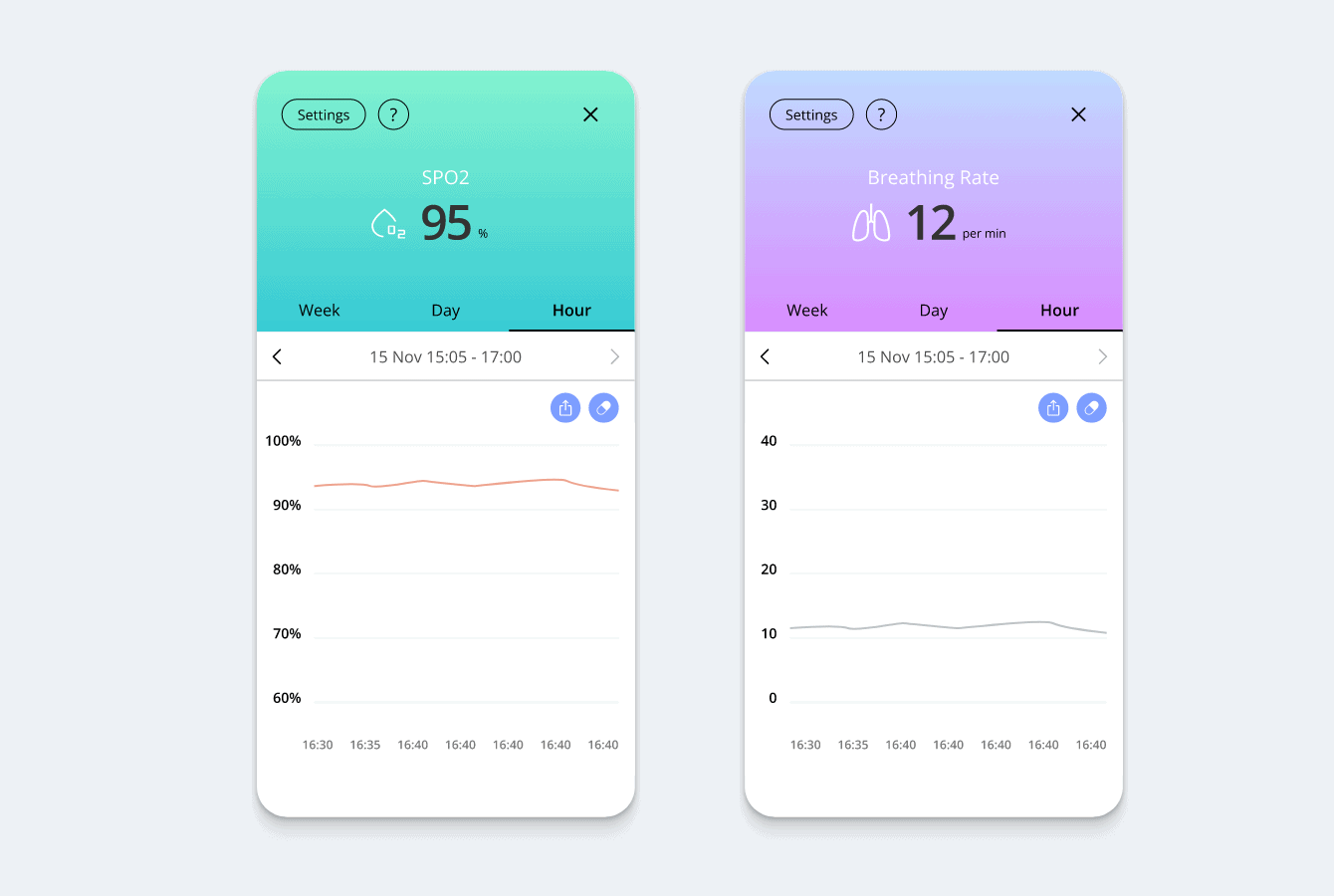
Our team prides itself on our ability to adapt to individual project needs and deliver tailored solutions that truly make a difference. To get a deeper understanding of the work we’ve done, we invite you to explore our case studies.
Conclusion
In this ever-evolving digital era, implementing a telemedicine system is no longer a luxury but a necessity. The cost of developing a telehealth system involves various stages, each with its associated expenses, from the discovery stage to the full system development and potential hidden costs. The telehealth adoption journey, although intricate, can be navigated with careful planning, thorough understanding, and a trustworthy partner.
Empeek has worked in HIPAA-compliant telehealth software development and EHR systems since 2015, including a telemedicine platform that replaced a US hospital’s legacy software with integrated records, scheduling, and billing.
Bring us the care pathway and the constraints, and we will come back with a component-level breakdown — hours, cost, sequence, and the assumptions behind each line, so you can challenge them. No obligation, no per-hour charge for the estimate.
Or read more about our custom telehealth solutions and telemedicine app development.

 Loading...